
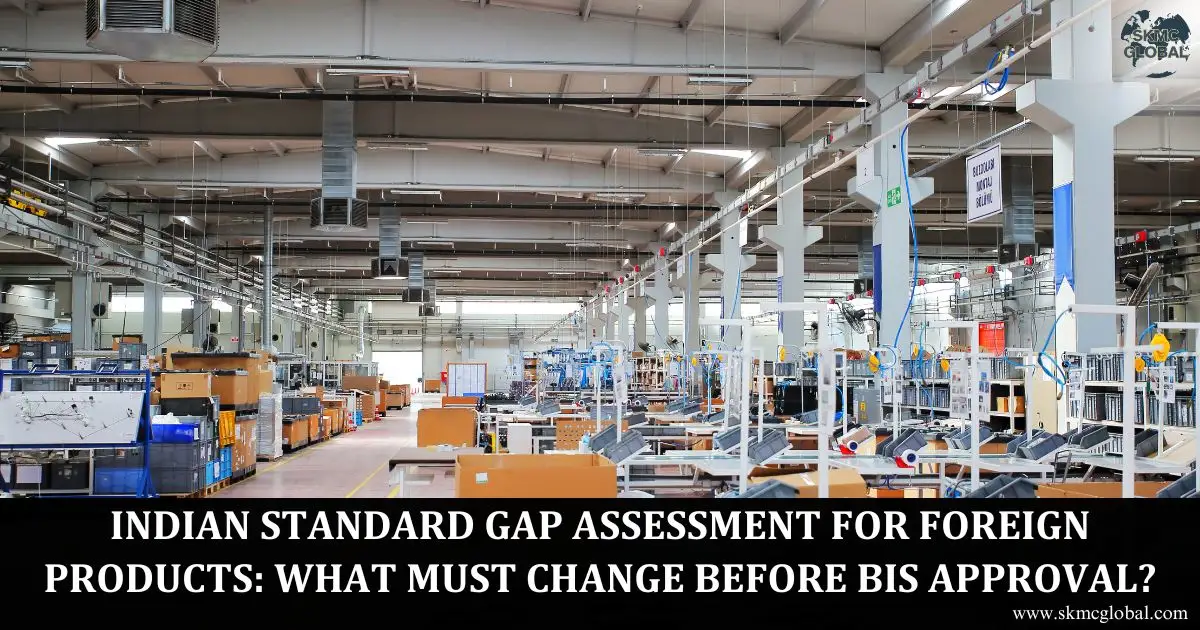
Manufacturers from overseas who wish to sell their products in the Indian market believe that it is sufficient to adhere to the international standards for the purpose of getting BIS approval. In some cases, this does not prove true. The Indian Standard gap assessment allows the manufacturer to become aware of the difference between the specifications of the existing product and the Indian standards. This gap assessment is conducted at an early stage which minimizes the number of failed tests, redesign, and delays in the process of obtaining the approval.
With the continuous growth of India’s Quality Control Orders (QCOs) in many product categories, the requirement for compliance with Indian standards is becoming more common. The products which satisfy ISO, IEC, EN, ASTM and other international standards may have to undergo further changes in design, documentation, marking and testing.
The gap assessment helps the engineering, R&D, QA and regulatory departments become acquainted with these gaps in advance. Compliance problems are detected at the early stages of product development rather than in the laboratory testing.
Why an Indian Standard Gap Assessment is Important
Each nation has its technical standard as per its regulations, environment, safety considerations and consumer considerations. The Indian Standards are formulated after taking into account local working conditions, electrical facilities, climate and safety considerations of the products.
A common mistake made by many international companies at the time of certifying their products is to believe that since they have an internationally certified product, it will satisfy all the conditions of an Indian Standard.
The assessment of an Indian Standard helps the manufacturer to find any discrepancy between his product and the Indian Standard and avoid testing errors.
Key Areas to Review Before BIS Approval
A comprehensive assessment should cover every technical aspect that may influence certification. The following areas require careful evaluation before applying for BIS Approval.
-
Indian Standards vs International Standards
The first step is comparing the applicable Indian Standard with the international standards already followed by the manufacturer. While many standards appear similar, important technical differences often exist in definitions, performance requirements, safety provisions, environmental conditions and testing procedures.
-
Why IEC, ISO or EN Compliance May Not Be Sufficient
Compliance with IEC, ISO, or EN standards demonstrates product quality but does not automatically satisfy Indian regulatory requirements. Indian Standards may contain additional provisions or modified technical requirements that are mandatory for certification. Therefore, relying solely on international certifications may not result in successful BIS Approval.
-
Technical Specification Comparison
Each product specification should be reviewed against the corresponding Indian Standard. Parameters such as dimensions, electrical ratings, mechanical performance, temperature limits, protection levels, safety features, tolerances, and performance characteristics should be carefully compared to identify deviations requiring correction.
-
Raw-Material and Component Differences
Some raw materials or parts that are internationally acceptable may not be up to Indian standards. The manufacturers must ensure that their insulating material, plastic parts, metal parts, electronic parts, coatings or protective devices comply with the specifications provided in the Indian Standard. Minor variations in the components can make a difference in the certification process.
-
Marking and Labelling Changes
Indian Standards prescribe detailed marking requirements for certified products. Product labels, rating plates, packaging information, warning labels, manufacturer's details, country of origin, model identification and user instructions should all be reviewed. Missing or incorrect markings are common reasons for non-compliance and should be corrected before product submission.
-
Test-Method and Acceptance-Criteria Differences
Even where technical specifications are similar, Indian testing methods may differ from international laboratory procedures. The testing sequence, sample preparation, environmental factors, acceptance criteria, testing method and reporting format may differ. Knowing these differences prior to laboratory testing will help in preparing compliance documentation.
-
Product Redesign and Technical Documentation
In cases where there are gaps found, the engineers have to consider redesigning some parts of the products. It is imperative for all the designs to be adequately documented using sketches, bill of materials, design calculations, specifications, engineering changes and technical documents. Proper documentation facilitates ease of regulation scrutiny by BIS.
-
Retesting and Evidence Management
Once product changes have been implemented, internal verification or third party testing is required whenever deemed necessary. Documentation such as test reports, calibration certificates, inspection documentation, validation documentation, material certifications and compliance documentation should be properly organized. Proper evidence management will aid in the certification process of BIS Approval.
Benefits of Conducting a BIS Product Compliance Assessment
A structured BIS product compliance assessment provides significant advantages throughout the certification process. Instead of seeing compliance as an ultimate task, manufactures can include regulatory requirements within the product development process from the outset.
Some key benefits include:
-
Early identification of technical gaps.
-
Reduced risk of laboratory test failures.
-
Lower product redesign costs.
-
Faster certification timelines.
-
Improved coordination between engineering and regulatory teams.
-
Better documentation readiness.
-
Increased confidence during regulatory review.
This is especially true for manufacturers dealing with many variants of their products or entering the Indian market with new products.
Building BIS Technical Compliance into Product Development
Successful companies look at compliance as a core part of their product design processes rather than just a separate procedure for obtaining approval. Coordination between engineering, quality control, procurement, testing and regulatory departments from the very beginning of the design phase ensures all technical requirements are taken into account prior to manufacture.
Keeping track of design review documentation, traceability of components used, supplier statements, and technical documents will contribute to BIS technical compliance and minimize the risk of getting certification problems at the last minute. Well-developed compliance process will enable manufacturers to react promptly to any changes in Indian Standards and Quality Control Orders.
How SKMC Global Can Help?
SKMC Global provides end-to-end support to foreign manufacturers seeking BIS Approval for their products. Our services include:
-
Conducting a detailed review of products against the applicable Indian Standards.
-
Identifying technical and regulatory compliance gaps before certification.
-
Comparing Indian Standards to the appropriate international standards like IEC, ISO, and EN
-
Examining the technical data sheets, product specifications, and engineering drawings.
-
Recommending necessary design modifications to meet Indian Standard requirements.
-
Verifying product marking and labelling requirements for compliance.
-
Assisting in preparing technical and regulatory documentation required for BIS certification.
-
Coordinating with BIS-recognised testing laboratories for product testing.
-
Supporting manufacturers in addressing laboratory observations and compliance queries.
-
Assistance during the whole BIS application process till the successful completion of BIS approval.
It will be our aim to facilitate the certification process for the manufacturers while ensuring minimum risks technologically and avoiding any delays in the project.
Conclusion
BIS Approval needs to do much more than having international certification. The manufacturers need to make sure that the products meet all the requirements of the corresponding Indian standard in terms of technical requirements, testing, marking, documents and evidence.
A systematic gap analysis prior to any process of certification helps manufacturers to find technical differences and make improvements, which leads to better results during the certification process. Spending time on this type of compliance review helps to save time on the whole project.